Pump Selection Software vs CPQ: What's the Difference?
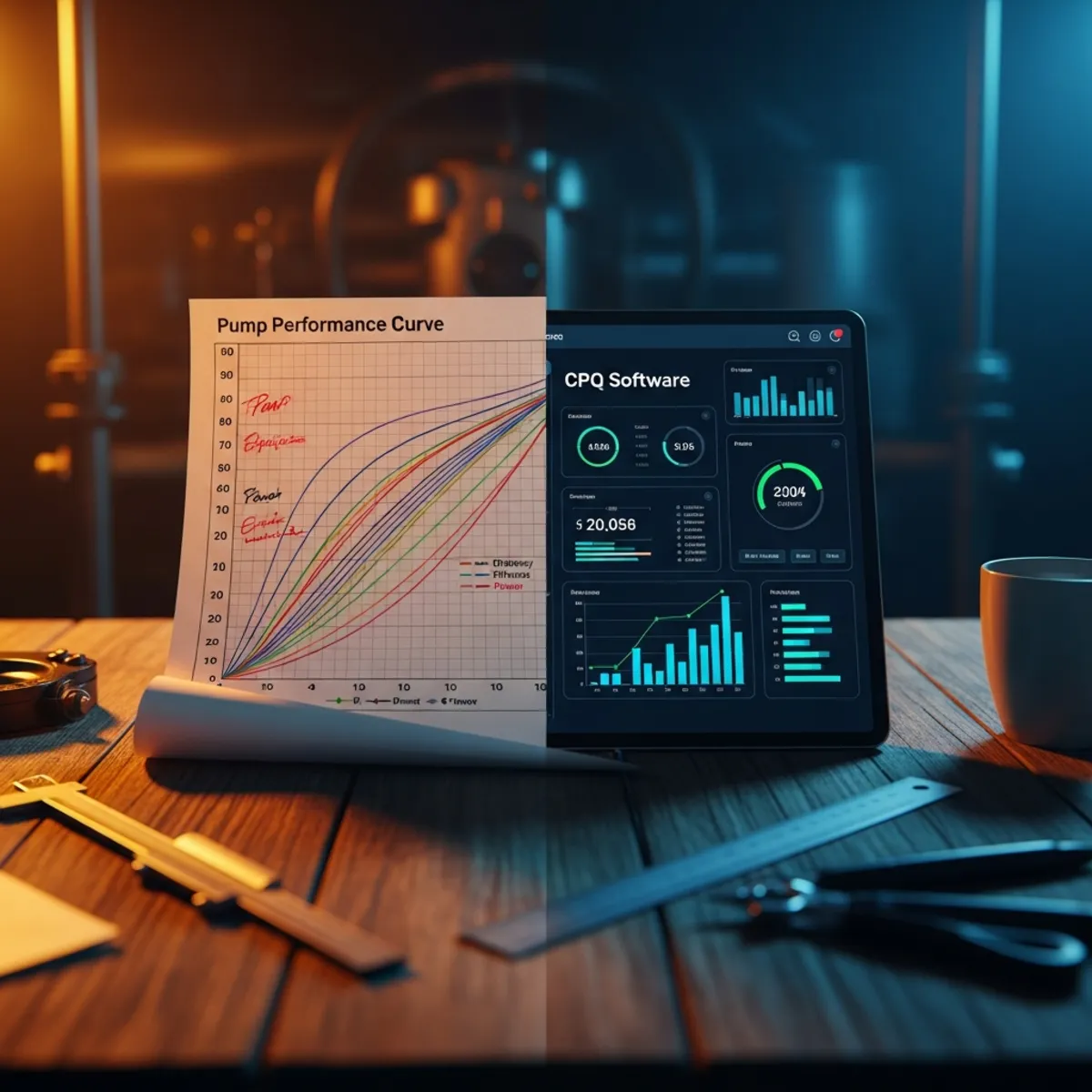
Pump selection software is built to answer one question. Given flow, head, fluid, and a few other inputs, which pump should we use? Most manufacturers have something for this, either internal or licensed from a third party. It's been a solved problem for decades.
Then they hit the wall. Picking the pump is the easy part. Everything that has to happen between 'we know which pump' and 'the customer has a quote in their inbox' is where pump companies still bleed time and money.
Where sizing software stops
A sizing tool picks the pump and produces a performance curve. It usually doesn't price the unit. It doesn't apply your discount structure. It doesn't enforce which materials go with which seal arrangements for the customer's fluid. It doesn't generate a branded proposal, capture the approval trail, or push the won order into your ERP.
Everything past 'here's the right pump' falls back to spreadsheets, email threads, and tribal knowledge about which discount tier this particular customer gets.
That's not a flaw in the sizing software. It was never designed to do those things. It's a flaw in treating sizing as the whole quoting solution, when it's really just the first ten percent.
What CPQ adds on top
CPQ picks up where sizing ends. It takes the selected pump and walks the rep through every option that has to be configured: motor, drive, seal arrangement, materials of construction, coatings, accessories. It enforces compatibility rules so the rep can't build something that won't work. It applies pricing in real time, including customer-specific contracts, regional pricing, distributor rates, and any active promotions.
Then it produces a quote document, captures internal approvals, tracks the deal through to close, and pushes the won order into your ERP as a clean, structured record. The configuration that the customer agreed to is the configuration that hits production, with no re-keying and no transcription errors.
Where the two systems should meet
The most powerful pattern is when sizing and CPQ live inside the same workflow. The rep starts in the sizing tool, picks the pump that matches the duty, and clicks through to configuration without re-entering anything. The pump's curve, its operating point, its efficiency, and its NPSH requirements all flow into the proposal automatically.
Cloud CPQ platforms either include sizing natively or integrate cleanly with the major sizing tools. Either way, the rep experience is one continuous flow, not two disconnected systems with a copy-paste in the middle.
Why you want both
Sizing without CPQ leaves you fast on the technical answer and slow on the commercial one. The right pump arrives in 15 minutes; the actual quote takes another five days.
CPQ without sizing means you're still relying on engineers to do every selection by hand, and the platform becomes a glorified pricing tool. The configuration logic exists, but the rep can't start the process without engineering involvement.
Put them together and a sales rep can take a call, size the pump, configure it correctly, price it accurately, and send a branded proposal before the customer is off their next call. That's the experience the best pump manufacturers in the world deliver. It's not a moonshot. It's just the right architecture, properly assembled.
See MangoCPQ in action
Want to see what this looks like with your products and your pricing? Book a 30-minute walkthrough.