CPQ and ERP Integration: Ending Double Entry for Pump Manufacturers
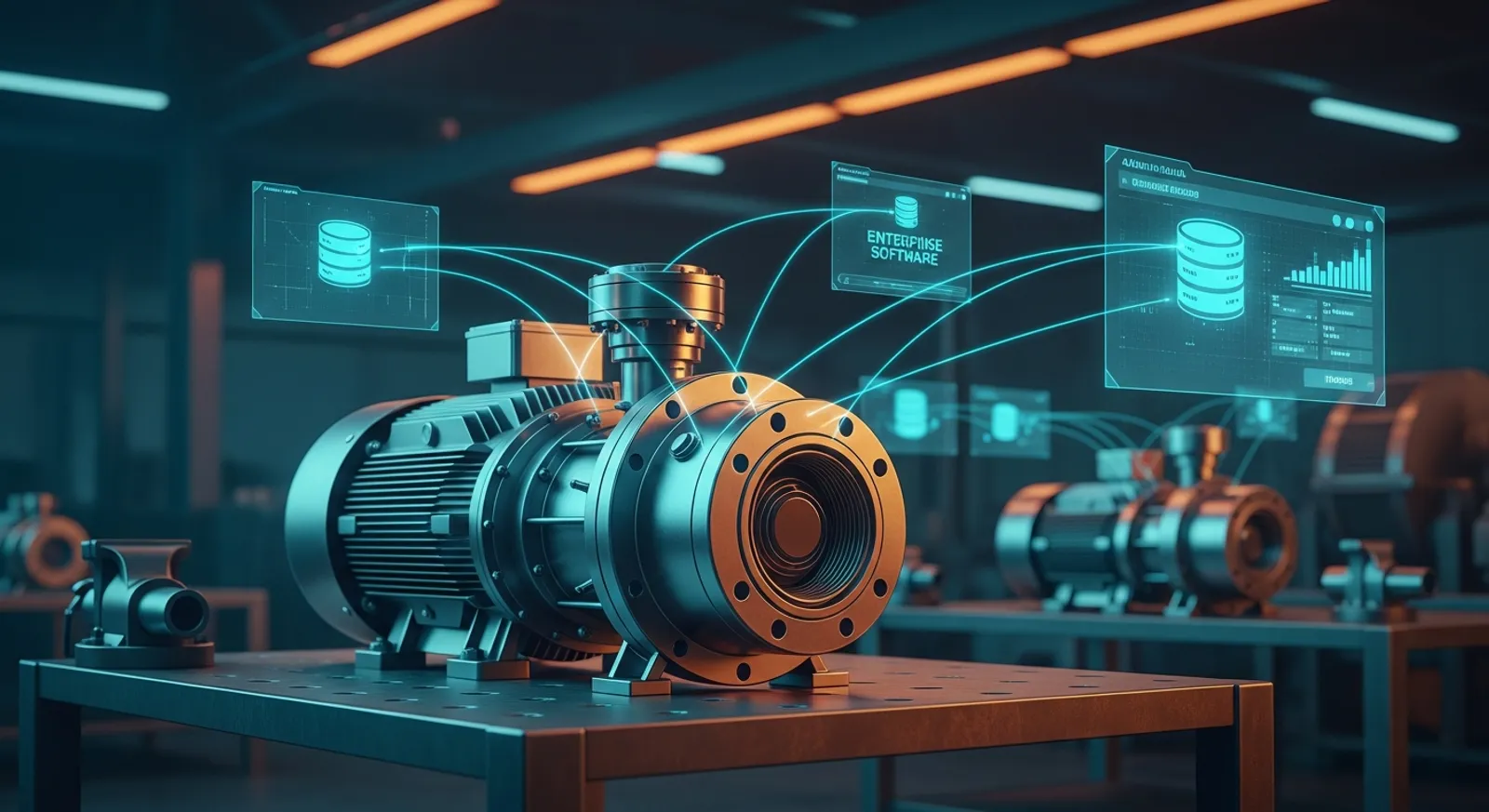
Most pump manufacturers already own two of the systems that should run their business. They have a way to configure and quote, even if it is a spreadsheet, and they have an ERP that handles inventory, purchasing, and the books. The problem is rarely that these systems are missing. The problem is that they do not talk to each other.
So a quote gets built in one place, approved, and then someone retypes the whole thing into the ERP to create the sales order. Every part number, every option, every price gets keyed a second time by hand. It feels like a small administrative task. It is actually where a large share of order errors are born.
Where the disconnect actually hurts
The damage shows up in three predictable places. The first is plain rework. An order entry clerk mistypes a seal code or drops an option line, and now the pump that ships does not match the pump that was sold. The second is timing. Re-keying a complex engineered order takes hours, and that delay sits between a signed quote and a confirmed delivery date the customer is waiting on.
The third is trust. When the quote, the order acknowledgement, and the invoice all come from different systems that were filled in separately, the numbers drift. A customer who spots a price on the quote that does not match the invoice starts checking everything you send, and that scrutiny slows down every future deal.
None of these problems come from bad people. They come from asking humans to be perfect copy machines between two systems that were never connected.
What a connected CPQ and ERP setup looks like
When CPQ and ERP are integrated, the configured quote becomes the single source of truth. The moment a quote is accepted, the sales order is created in the ERP automatically, with every line, option, and price carried across exactly as they were sold. No one retypes anything.
The flow runs both directions. Pricing, cost, and inventory data live in the ERP and feed the configurator, so the salesperson is always quoting against current numbers. The configured result flows back into the ERP as a clean order. The two systems stay aligned because neither one depends on a person remembering to update the other.
For an engineered pump, that means the motor, the impeller trim, the material upgrades, the seal arrangement, and the testing options all land in production planning exactly as the customer approved them.
The bill of materials problem
The hardest part of connecting quoting to production is the bill of materials. A configured pump is not a single SKU. It is a structure of components that changes based on the selections made during quoting. Integration is only useful if those selections generate the right BOM on the other side.
A strong CPQ holds the configuration rules that decide which components a given selection requires, then hands the ERP a complete, accurate BOM for that exact build. Purchasing sees what to buy, production sees what to assemble, and nobody has to reverse-engineer the order from a PDF.
This is the difference between an integration that moves a header and a total, and one that actually drives the shop floor. The second kind is what removes errors, because the BOM is generated from the same rules that priced the quote.
Pricing that stays in sync
Pricing drift is one of the quietest margin leaks in manufacturing. Costs change, material adders move, and freight assumptions get revised. If your configurator carries its own copy of pricing that someone updates by hand, it will always lag behind reality.
With integration, pricing logic can pull current cost and inventory signals from the ERP, so margin floors and discount rules are applied against numbers that are actually true today. When a casting cost jumps, the quotes reflect it without a frantic spreadsheet update and an email to the sales team.
What to integrate first
You do not have to connect everything at once. The highest-value first step is quote-to-order: when a quote is accepted, create the sales order and its BOM in the ERP automatically. That single connection removes the most error-prone manual step in the whole process.
From there, pull cost and inventory data into the configurator so pricing stays honest, then add order status flowing back to the salesperson so they can answer delivery questions without calling the plant. Each step stands on its own, and each one removes a category of phone calls and mistakes.
The payoff
Manufacturers who connect quoting and ERP usually feel the change first in the order desk. The hours spent re-keying orders disappear, and the steady trickle of wrong-configuration shipments dries up because the order is built from the same rules that built the quote.
The deeper payoff is speed with confidence. You can promise a delivery date the moment a quote is accepted, because the order is already in the system that schedules it. For a pump manufacturer competing on responsiveness, that is the whole game.
See MangoCPQ in action
Want to see what this looks like with your products and your pricing? Book a 30-minute walkthrough.