Why Aftermarket Quoting Is the Hidden Margin in Pump Manufacturing
Ask a pump manufacturer what drives the business and most will talk about new pump sales. The big orders, the engineered projects, the names on the reference list. Aftermarket parts and service tend to get treated as an afterthought, a support function rather than a profit center.
That framing is expensive. For many pump manufacturers, the aftermarket carries higher margins than new equipment and produces revenue that keeps coming long after the original sale. The reason it underperforms is rarely demand. It is that aftermarket quoting is slow, manual, and nobody owns it.
The aftermarket is where the margin lives
New pump sales are competitive and price-sensitive. Buyers shop hard, and margins get squeezed in the bidding. Replacement parts and service tell a different story. When a pump is down and a plant is losing production, the customer needs the right part now, and price is far less of a sticking point than speed and certainty.
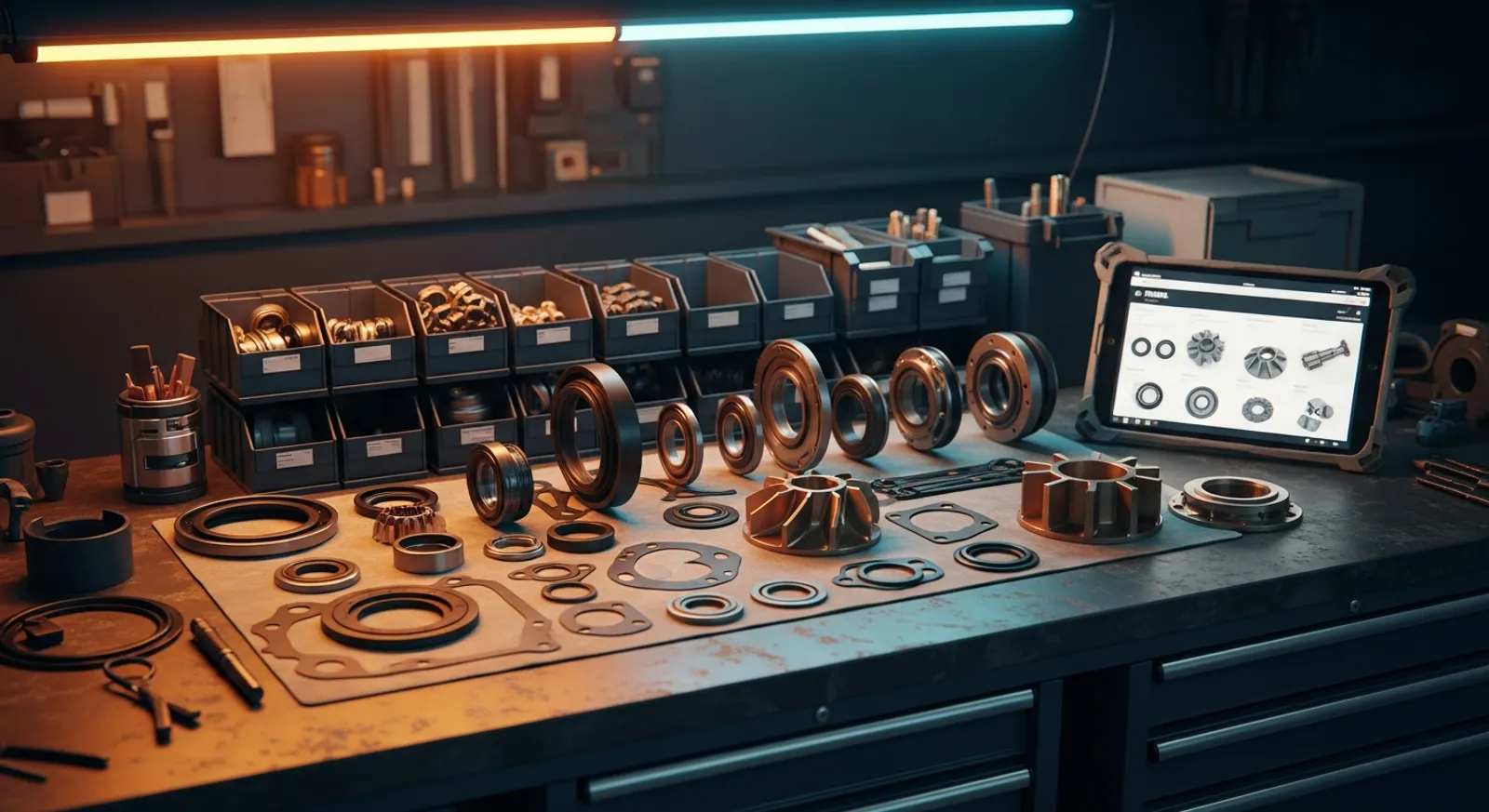
Every pump you have ever shipped is a future stream of seals, bearings, impellers, wear rings, and service work. That installed base is an annuity, and it grows with every new unit you sell. The manufacturers who treat it that way build a revenue line that holds up even when new equipment orders soften with the economy.
Why aftermarket quoting is so slow
The trouble is that aftermarket requests are awkward to quote. A customer calls with a serial number, or worse, a vague description and a photo of a faded nameplate. Someone has to figure out which pump it is, what the original build was, which parts it needs, and whether those parts are still current or have been superseded.
That detective work usually depends on digging through old order records, paper files, or the memory of whoever was around when the pump shipped. It can take days, and by the time the quote goes out, the customer with a stopped line has already called a third-party parts supplier who answered faster.
So the manufacturer who actually built the pump loses the parts business to a competitor, on margin they should have owned, because they could not answer quickly enough.
Turning the installed base into a quoting advantage
The fix starts with knowing what you shipped. When the original configuration of every pump is captured and searchable, an aftermarket request stops being a research project. A serial number pulls up the exact build, the components in it, and the parts that fit, in seconds rather than days.
This is where a configurator earns its keep on the aftermarket side, not just for new sales. The same rules that defined the original build tell you what parts that build needs. Identify the pump, and the correct replacement parts follow automatically, including current equivalents for anything that has been superseded.
The manufacturer who can quote the right part in minutes wins the business almost every time, because they pair the fastest response with the authority of having built the pump in the first place.
Configuring repairs, not just new pumps
A repair or rebuild is its own kind of configuration. A pump comes back for overhaul, and the scope depends on its condition: which parts to replace, which to recondition, what to test, what upgrades to offer while it is open on the bench. Quoting that by hand is slow and inconsistent from one estimator to the next.
Treating a repair as a configurable product brings the same speed and consistency to service that a configurator brings to new sales. The estimator selects the condition findings, and the system builds a structured, priced scope with the right parts and labor. Every quote follows the same logic, so margins stay protected and customers get a consistent answer.
Service contracts and renewals
Beyond one-off parts and repairs, the installed base supports recurring service agreements: planned maintenance, spare parts stocking, priority response. These are the stickiest, most predictable revenue a pump manufacturer can build, and they are far easier to sell when you can show the customer exactly which units you would cover and what it would cost.
When the installed base is captured and quotable, building a service agreement becomes a configuration exercise rather than a custom project. That makes these contracts easier to propose, easier to renew, and easier to expand as the customer adds equipment.
Where to start
The first move is capturing the installed base so any pump you have shipped can be looked up by serial number and tied to its original build. Even a partial start, focused on your most active customers and product lines, begins paying off immediately in faster parts quotes.
From there, turn parts identification and repair scoping into configurable, rule-driven processes so your team can answer in minutes. The goal is simple: be the fastest, most authoritative source of parts and service for every pump you have ever built. Do that, and the aftermarket stops being an afterthought and becomes one of the strongest lines in the business.
See MangoCPQ in action
Want to see what this looks like with your products and your pricing? Book a 30-minute walkthrough.